Buying guide
Natural vs lab-grown diamonds
Both are real diamonds. The differences are origin, price and long-term value. Here's the plain answer from a family that has sold diamonds on 47th Street since 1950.
Side by side
| Attribute | Natural | Lab-grown |
|---|---|---|
| What it is | Diamond: crystallised carbon | Diamond: crystallised carbon |
| How it forms | In the earth, over billions of years | In a lab, over weeks (CVD or HPHT) |
| Look and hardness | Identical to the eye; 10 on the Mohs scale | Identical to the eye; 10 on the Mohs scale |
| Grading | Graded on the 4Cs by independent labs | Graded on the 4Cs; report states lab-grown |
| Price for the same size | Higher | Typically much lower |
| Long-term value | Established resale market | Limited resale market |
| Best for | Heirloom pieces; buyers who value rarity | Maximum size for the budget |
The 4Cs
What actually changes the price
Cut
How well the stone returns light. It has the biggest effect on sparkle.
Colour
Graded from D (colourless) down. Once set, most people can't tell F from H.
Clarity
Internal marks. VS stones look clean to the naked eye.
Carat
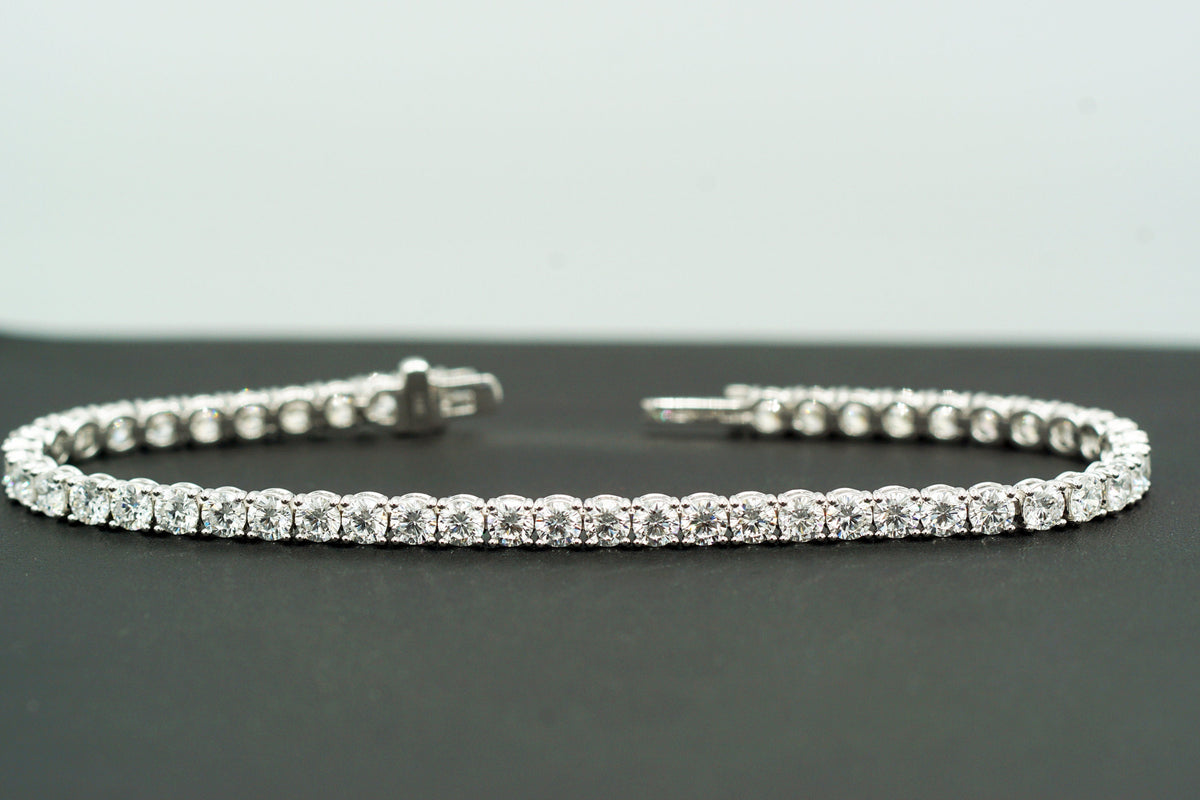
Weight, not size. In tennis pieces, total carat weight is spread across many stones.
Still deciding?
Still deciding? Ask a jeweler.
Email us your budget and priorities and we'll recommend natural and lab-grown options, with photos and grading details.